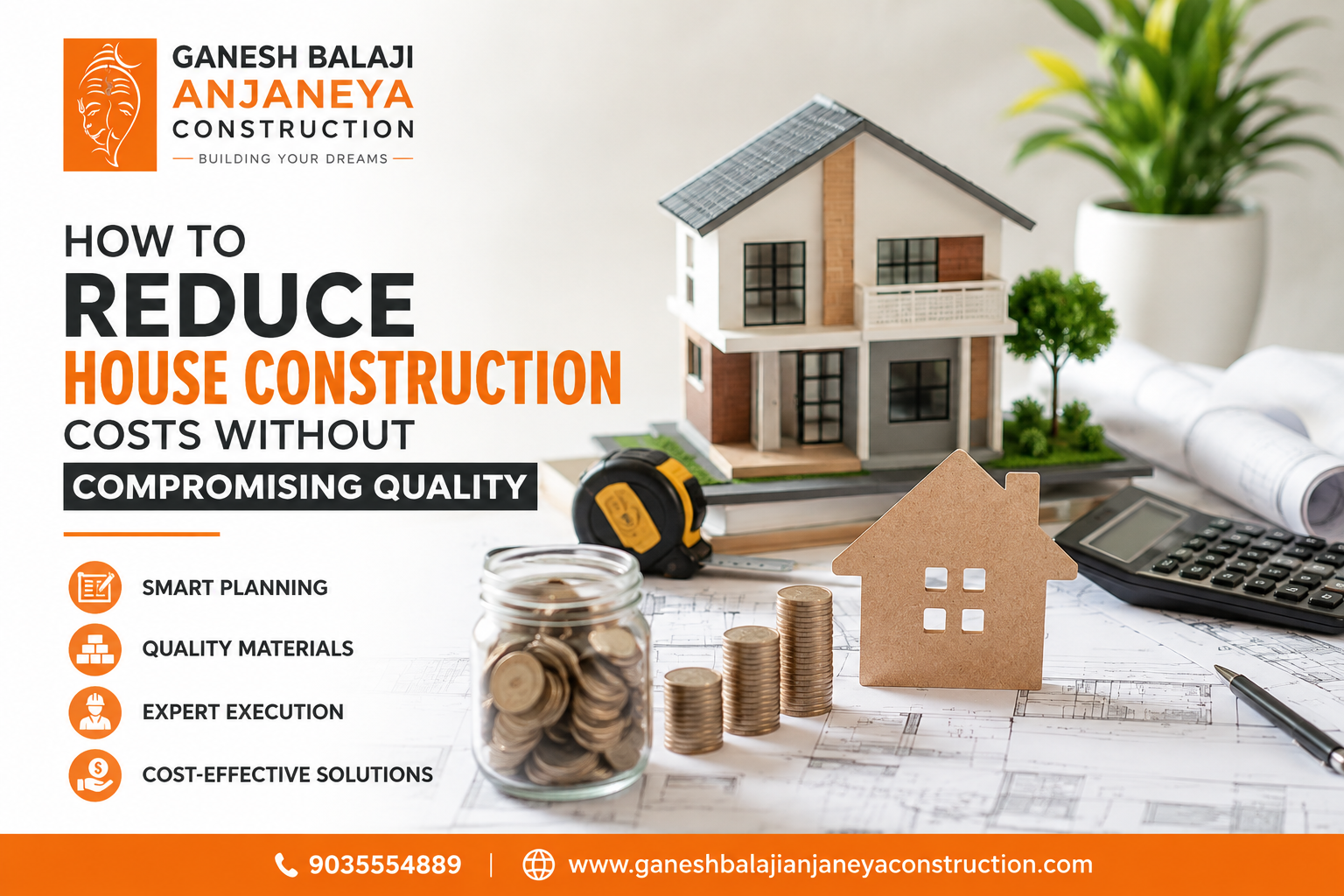
Building your dream home doesn’t have to mean exceeding your budget. Discover practical ways to reduce house construction costs while maintaining strong construction, quality materials, modern design, and long-term durability.
Building a home is one of the biggest investments you will make. While everyone wants a beautiful and durable home, construction costs can quickly increase due to material prices, design changes, labour expenses, and poor planning. The good news is that you can control your construction budget without compromising the quality of your home.
1. Plan Your Budget Before Construction
Start with a realistic construction budget based on your plot size, built-up area, design, materials, and requirements. Keep a small contingency amount for unexpected expenses. A well-planned budget helps prevent unnecessary spending during construction.
2. Choose a Practical Home Design
A complicated design with excessive curves, projections, large spans, or unnecessary architectural elements can increase construction costs. A simple and functional design can provide an attractive appearance while reducing material and labour requirements.
3. Select Quality Materials Wisely
Reducing costs does not mean choosing the cheapest materials. Low-quality materials can lead to repairs and maintenance expenses in the future. Instead, compare different brands and specifications and select materials that offer the right balance between quality, durability, and price.
4. Avoid Frequent Design Changes
Changes after construction has started can result in material wastage, additional labour costs, and project delays. Finalising the floor plan, electrical points, plumbing layout, doors, windows, and finishes before construction begins can help keep the project within budget.
5. Optimise the Built-Up Area
Every additional square foot increases construction costs. Focus on the spaces your family actually needs. Efficient planning can make a smaller home feel spacious while reducing expenses on materials, labour, flooring, painting, electrical work, and maintenance.
6. Plan Electrical and Plumbing Work Carefully
Properly planned electrical and plumbing layouts can reduce unnecessary pipe lengths, wiring, fittings, and future repair work. Positioning kitchens, bathrooms, and utility areas efficiently can also help reduce plumbing costs.
7. Compare Material and Labour Costs
Before purchasing major construction materials, compare prices from reliable suppliers. Bulk purchasing at the right stage of construction may also help control costs. However, materials should always be selected based on quality and suitability rather than price alone.
8. Focus on Long-Term Value
Some features may cost slightly more initially but provide better durability and lower maintenance expenses. Good-quality waterproofing, structural materials, electrical systems, plumbing, doors, and windows can help reduce future repair and replacement costs.
9. Work With an Experienced Construction Company
An experienced construction company can help with planning, material selection, labour management, quality control, and project scheduling. Proper supervision can reduce material wastage and prevent expensive construction mistakes.
10. Maintain Quality Control Throughout Construction
Cost savings should never come from compromising structural safety or workmanship. Regular inspections and proper supervision help ensure that construction work follows the approved design and required quality standards.
Build Smart, Not Just Cheap
The best way to reduce house construction costs is through better planning, efficient design, proper material selection, and professional project management. Cutting corners on structural work or essential materials may reduce the initial expense but can create much higher costs later.
At Ganesh Balaji Anjaneya Construction, the focus is on helping homeowners build quality homes with practical designs and efficient construction planning. From design and planning to execution, professional guidance can help you achieve the right balance between cost, quality, functionality, and durability.
If you are planning to build your dream home, careful planning from the beginning can help you avoid unnecessary expenses while creating a home that remains strong and comfortable for years to come.
1. Plan Your Budget Before Construction
Start with a realistic construction budget based on your plot size, built-up area, design, materials, and requirements. Keep a small contingency amount for unexpected expenses. A well-planned budget helps prevent unnecessary spending during construction.
2. Choose a Practical Home Design
A complicated design with excessive curves, projections, large spans, or unnecessary architectural elements can increase construction costs. A simple and functional design can provide an attractive appearance while reducing material and labour requirements.
3. Select Quality Materials Wisely
Reducing costs does not mean choosing the cheapest materials. Low-quality materials can lead to repairs and maintenance expenses in the future. Instead, compare different brands and specifications and select materials that offer the right balance between quality, durability, and price.
4. Avoid Frequent Design Changes
Changes after construction has started can result in material wastage, additional labour costs, and project delays. Finalising the floor plan, electrical points, plumbing layout, doors, windows, and finishes before construction begins can help keep the project within budget.
5. Optimise the Built-Up Area
Every additional square foot increases construction costs. Focus on the spaces your family actually needs. Efficient planning can make a smaller home feel spacious while reducing expenses on materials, labour, flooring, painting, electrical work, and maintenance.
6. Plan Electrical and Plumbing Work Carefully
Properly planned electrical and plumbing layouts can reduce unnecessary pipe lengths, wiring, fittings, and future repair work. Positioning kitchens, bathrooms, and utility areas efficiently can also help reduce plumbing costs.
7. Compare Material and Labour Costs
Before purchasing major construction materials, compare prices from reliable suppliers. Bulk purchasing at the right stage of construction may also help control costs. However, materials should always be selected based on quality and suitability rather than price alone.
8. Focus on Long-Term Value
Some features may cost slightly more initially but provide better durability and lower maintenance expenses. Good-quality waterproofing, structural materials, electrical systems, plumbing, doors, and windows can help reduce future repair and replacement costs.
9. Work With an Experienced Construction Company
An experienced construction company can help with planning, material selection, labour management, quality control, and project scheduling. Proper supervision can reduce material wastage and prevent expensive construction mistakes.
10. Maintain Quality Control Throughout Construction
Cost savings should never come from compromising structural safety or workmanship. Regular inspections and proper supervision help ensure that construction work follows the approved design and required quality standards.
Build Smart, Not Just Cheap
The best way to reduce house construction costs is through better planning, efficient design, proper material selection, and professional project management. Cutting corners on structural work or essential materials may reduce the initial expense but can create much higher costs later.
At Ganesh Balaji Anjaneya Construction, the focus is on helping homeowners build quality homes with practical designs and efficient construction planning. From design and planning to execution, professional guidance can help you achieve the right balance between cost, quality, functionality, and durability.
If you are planning to build your dream home, careful planning from the beginning can help you avoid unnecessary expenses while creating a home that remains strong and comfortable for years to come.